
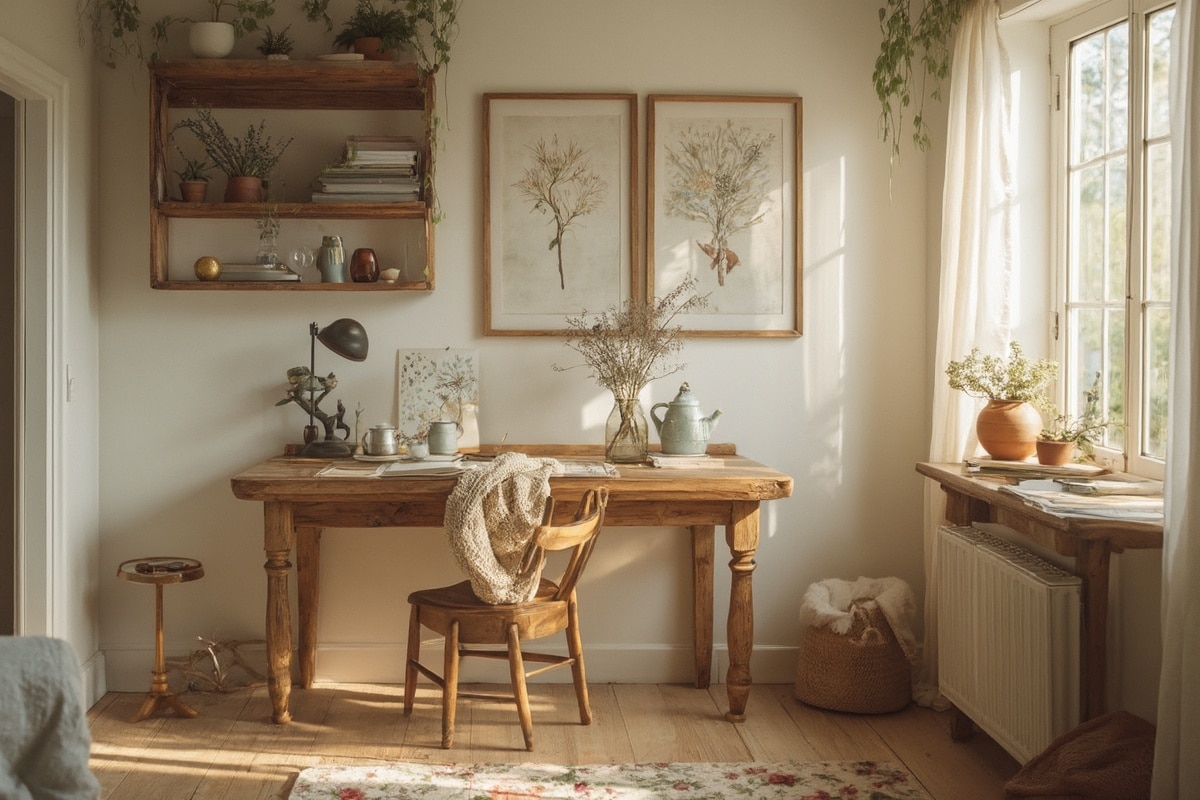
When I transformed my spare bedroom into a dreamy cottagecore workspace, I didn’t expect it to become my favorite spot in the house. The gentle blend of decor—floral prints, weathered woods, and soft textures—made every workday feel less like a chore and more like a retreat. Did you know that a well-designed home office can boost productivity by up to 20%? That stat stuck with me as I swapped out my plain desk for a vintage pine table and draped crocheted throws over my chair. There’s something magical about cottagecore, especially when mixed with modern rustic touches. It’s not just about aesthetics—it’s about creating a space where work and relaxation coexist. Whether your style leans traditional or you crave a bit of whimsy, a cottagecore home office can bring warmth and charm to your daily routine. I’ll share how you can turn any corner into a modern rustic haven, even if you’re tight on space or budget.
What Makes Cottagecore Home Office Decor So Inviting?
Cottagecore is more than a trend—it’s a lifestyle rooted in nostalgia and simplicity. Picture soft pastels, natural woods, hand-thrown pottery, and a sprinkle of floral patterns. The style feels like a gentle hug, creating a workspace that soothes rather than distracts. It’s inspired by rural English cottages, the romantic notion of living close to nature, and the coziness of handmade details.
Modern rustic twists add structure and crispness. Think matte black hardware, clean-lined desks, and contemporary lighting. You’ll spot the look in celebrity homes, like Taylor Swift’s upstate retreat or Zooey Deschanel’s sunlit reading nook. These spaces mix thrifted finds with new pieces, proving that cottagecore can be elegant and functional.
Today’s home office trends are all about personal comfort and sustainability. Vintage items, like old-school lanterns or reclaimed wood bookshelves, blend with tech-friendly additions—a sleek monitor arm or an ergonomic chair in tweed. The result is a workspace that’s both practical and picturesque, ideal for anyone who loves the idea of working “in the garden” even when indoors.
How Do You Plan and Visualize Your Cottagecore Workspace?
Start by measuring your available space. Grab a tape measure and jot down the dimensions—length, width, and ceiling height. Even a nook by the window can work. I once set up a workspace in a 4’ x 6’ alcove, using a fold-down desk and floating shelves to maximize every inch.
Next, clarify your decor goals. Do you want a serene writing desk, a crafty corner for DIY projects, or a cozy Zoom backdrop? List your must-haves: a sturdy desk, comfortable chair, lots of natural light, and storage for papers and supplies. Think about how you’ll use the space—will you need file cabinets or just a few baskets?
Gather inspiration. I love making mood boards using Pinterest or Canva. Pull images of rustic desks, floral wallpaper (try peel-and-stick for rentals), and vintage lamps. Mix in photos of woodland scenes or quaint cottages. This helps you see patterns—maybe you gravitate toward green and cream, or you love gingham and lace. Save color swatches, like Benjamin Moore’s “Soft Fern” or Sherwin Williams’ “Alabaster.”
Settle on a design approach. Some people prefer all-in-one transformations, but I found layering works best: start small, then build over time. Make a vision board, sketch a rough layout, and note where sunlight falls during work hours. Consider placing your desk near a south-facing window for the best light. When I planned my last office, I taped paper outlines on the floor to test furniture placement—a trick I learned after a desk nearly blocked my closet door.
Use decision frameworks like “must-have vs. nice-to-have” lists. If you’re torn between a handmade desk or a store-bought one, weigh factors like cost, durability, and style. Sometimes, mixing old and new leads to the most interesting results. Don’t forget to factor in your workflow—cord management, reachability, and comfort all matter.
What Materials and Decor Items Do You Need for a Cottagecore Office?
- Vintage-inspired desk (reclaimed wood, painted legs, or farmhouse table)
- Ergonomic chair with tweed, linen, or slipcover
- Floating shelves or rustic bookcases
- Floral or botanical wallpaper (removable for easy updates)
- Ceramic mugs and pottery organizers
- Woven baskets for storage
- Soft area rug in faded patterns (5’x7’ for most home offices)
- Table lamp with pleated shade
- Handmade wall art, pressed flower frames, or vintage prints
- Plants—real or faux, like trailing ivy or potted fern
For budget-friendly options, check thrift stores for gently used desks and chairs. IKEA’s “LISABO” desk looks rustic with a quick sanding. Target and Walmart offer floral pillows and baskets. During spring and fall, watch for sales at HomeGoods and local garden centers. I’ve saved money by making my own wall art or upcycling old crates into shelves. Don’t overlook garage sales or Facebook Marketplace for hidden gems.
What Are the Steps to Decorating a Cottagecore Workspace?

- Clear and Clean the Area (1-2 hours)
Remove old furniture, vacuum, and wipe down surfaces. Start with a blank canvas, even if that means just clearing a small nook. - Plan Layout and Mark Placement (1 hour)
Tape outlines on the floor for your desk, chair, and shelves. Test walking paths and make sure drawers open freely. If you’re working in a shared room, use a folding screen to create visual separation. - Paint or Wallpaper (2-4 hours)
Apply a soft paint color—“Mizzle” by Farrow & Ball (a muted green) or “White Dove” by Benjamin Moore. For wallpaper, peel-and-stick options save time. Focus on one accent wall if you’re short on time. - Set Up Furniture (1-2 hours)
Place your desk near the window for natural light. Angle your chair so you have a pleasant view. Add floating shelves above the desk for easy access to supplies. If your desk is heavy, use felt pads to avoid scratching the floor. - Add Storage and Organization (1 hour)
Arrange baskets for paperwork, pottery cups for pens, and small trays for tech items. Hide cords with cable covers or decorative boxes. I once painted a shoebox to match my wallpaper—it doubled as a charger station. - Style with Decor and Textiles (1 hour)
Layer in a patterned area rug, floral cushions, and a crocheted throw. Hang botanical prints or pressed flower frames. Try a mix of textures—lace curtains, linen slipcovers, and a chunky knit pillow. - Bring in Nature (30 minutes)
Set potted plants on shelves or the windowsill. Mix real and faux greenery for easy care. If space allows, add a small vase of wildflowers. - Light It Up (30 minutes)
Choose a table lamp with a pleated shade for cottagecore charm. Add fairy lights or a candle in a safe holder for extra coziness. Make sure your lighting is bright enough for work but soft enough for relaxation. - Troubleshooting and Tweaks (ongoing)
Adjust the layout as needed—slide furniture to avoid glare, or swap out baskets for drawers. If your space feels cramped, remove one decor item. Sometimes less is more. When my desk felt too crowded, I moved my lamp to a shelf and instantly gained space. - Personalize and Enjoy (ongoing)
Add a framed photo, a favorite book, or a scented candle. Sit back and see how it feels. You can always tweak your decor over time. My own office changed monthly as I swapped out art and added new thrifted finds.
How Can You Style and Arrange Cottagecore Decor Like a Pro?

Layering is the secret to a cozy workspace. Start with textiles—a plush rug, linen curtains, and a knitted throw. Add height with stacked books, trailing plants, and candle holders. I once used a teacup as a pencil holder, which made me smile every time I sat down.
Balance is important. Mix large furniture (like a wide desk) with smaller accents (petite vase, tiny clock). Keep scale in mind—a giant lamp can overpower a dainty table. Try grouping items in threes for a curated look. When I styled my shelves, I alternated between books, pottery, and framed botanicals for visual interest.
Magazine-worthy spaces often have a “lived-in” charm. Drape a blanket over your chair, leave a book open on your desk, or tuck a wildflower sprig into a mug. Avoid clutter but don’t aim for perfection. My best designs happened when I wasn’t afraid to mix patterns—gingham, stripes, and florals can work together if you stick to a color palette.
Don’t forget about lighting. Layer ambient (overhead), task (desk lamp), and accent (fairy lights) sources. If your space feels flat, add a mirror to reflect light. I learned the hard way that harsh LED bulbs kill cottagecore vibes—warm white (2700K) is best.
What Are the Best Color and Texture Combinations for Cottagecore Offices?
Cottagecore thrives on gentle, nature-inspired colors. Try sage green (Hex #9CAF88), creamy whites (Hex #F8F8F6), and muted pinks (Hex #E5C3C6). Add earthy browns and soft blues for depth. My favorite palette mixes “Sea Salt” by Sherwin Williams with faded rose accents.
Texture is just as important. Mix rough-hewn wood desks with soft linen chair covers. Add a chunky knit pillow, lace curtains, and a velvet cushion for a layered effect. I like to keep one texture dominant—like distressed wood—then sprinkle in lighter touches, such as a silk flower arrangement or a cotton rug.
Seasonal color swaps keep your space fresh. In spring, layer pastel greens and butter yellow. For autumn, switch to burnt orange and rusty reds. Accent colors shine when used sparingly—a pop of turquoise on a mug or a blush pink notebook. Don’t be afraid to experiment. Once, I paired a mustard pillow with sage walls and was surprised how cheerful it looked.
What Are the Most Common Cottagecore Workspace Mistakes and How Do You Avoid Them?
One of the biggest pitfalls is overcrowding. Too many decor items can make your workspace feel chaotic. Stick to a “one in, one out” rule when adding new pieces. I learned this after my desk became a dumping ground for every cute mug I found.
Scale and proportion mistakes are easy to make. A tiny chair with a massive desk looks odd. Measure before buying, and sketch your layout. Lighting is another challenge—dim corners hurt productivity and mood. Place lamps in key spots and check for glare on your screen.
Flow problems crop up when furniture blocks movement. Keep walkways clear and make sure you can open drawers and doors. In my first setup, I didn’t leave enough room for my chair to slide out. Now, I always allow at least 36” behind my desk.
Personal learning: I once hung art too high, making the room feel disconnected. Now, I keep wall art at eye level (about 57” from the floor). Don’t worry about getting it perfect—most mistakes are easy fixes.
How Can You Achieve Cottagecore Style on a Budget?
DIY decor is your friend. Paint old furniture with milk paint for a rustic finish. Make your own pressed flower art with thrifted frames. I’ve upcycled crates into wall shelves—just sand and stain for charm. Thrift stores often carry baskets, pottery, and fabric scraps perfect for layering.
Splurge on one statement piece—maybe a sturdy desk or ergonomic chair—and save on accents. Mix store-bought with homemade. Use peel-and-stick wallpaper for inexpensive upgrades. I found a vintage lamp at a yard sale for $8, adding instant character.
High-end looks are possible for less. Group small vases, drape a handmade throw, and use faux plants for easy care. My proudest moment was styling a workspace for under $150 with thrift finds and a splash of creativity.
Conclusion: Why Start Your Cottagecore Workspace Transformation?
Cottagecore decor brings warmth, creativity, and comfort to your home office. The mix of rustic wood, soft fabrics, and gentle colors turns any workspace into a personal retreat. You don’t need a big budget or a full renovation—start with a pillow, a plant, or a painted desk.
Every small change adds up. When I began my transformation, I was nervous about mixing old and new. But the result felt like a breath of fresh air, making workdays brighter and more enjoyable.
If you’re craving a workspace that inspires and calms, now’s the time to try cottagecore style. Gather your favorite decor, sketch a plan, and let your personality shine. Your dream office is just a few steps away—create a space you’ll love coming home to every day.
FAQs: Cottagecore Home Office Ideas

What are the essential decor items for a cottagecore home office?
Key items include a rustic desk, ergonomic chair with soft fabric, cozy area rug, floating shelves, and botanical prints. Add woven baskets, pottery organizers, and plants for a complete look.
How do I choose the right color palette for modern rustic cottagecore style?
Stick to muted greens, warm whites, and soft pinks. Accent with earthy browns or faded blues. Use paint swatches and mood boards to test combinations before finalizing your choices.
Can I create a cottagecore workspace in a small room or apartment?
Absolutely! Use fold-down desks, wall-mounted shelves, and multi-use furniture. Focus on light colors and vertical storage to make small spaces feel larger and more inviting.
Where can I find budget-friendly cottagecore decor?
Check thrift stores, garage sales, and online marketplaces. DIY projects like painted furniture or handmade art are cost-effective. Seasonal sales at big box stores also offer great deals.
What lighting works best for a cottagecore home office?
Opt for warm white bulbs (2700K), table lamps with pleated shades, and string lights for ambiance. Position lamps to avoid screen glare and ensure enough light for productivity.