
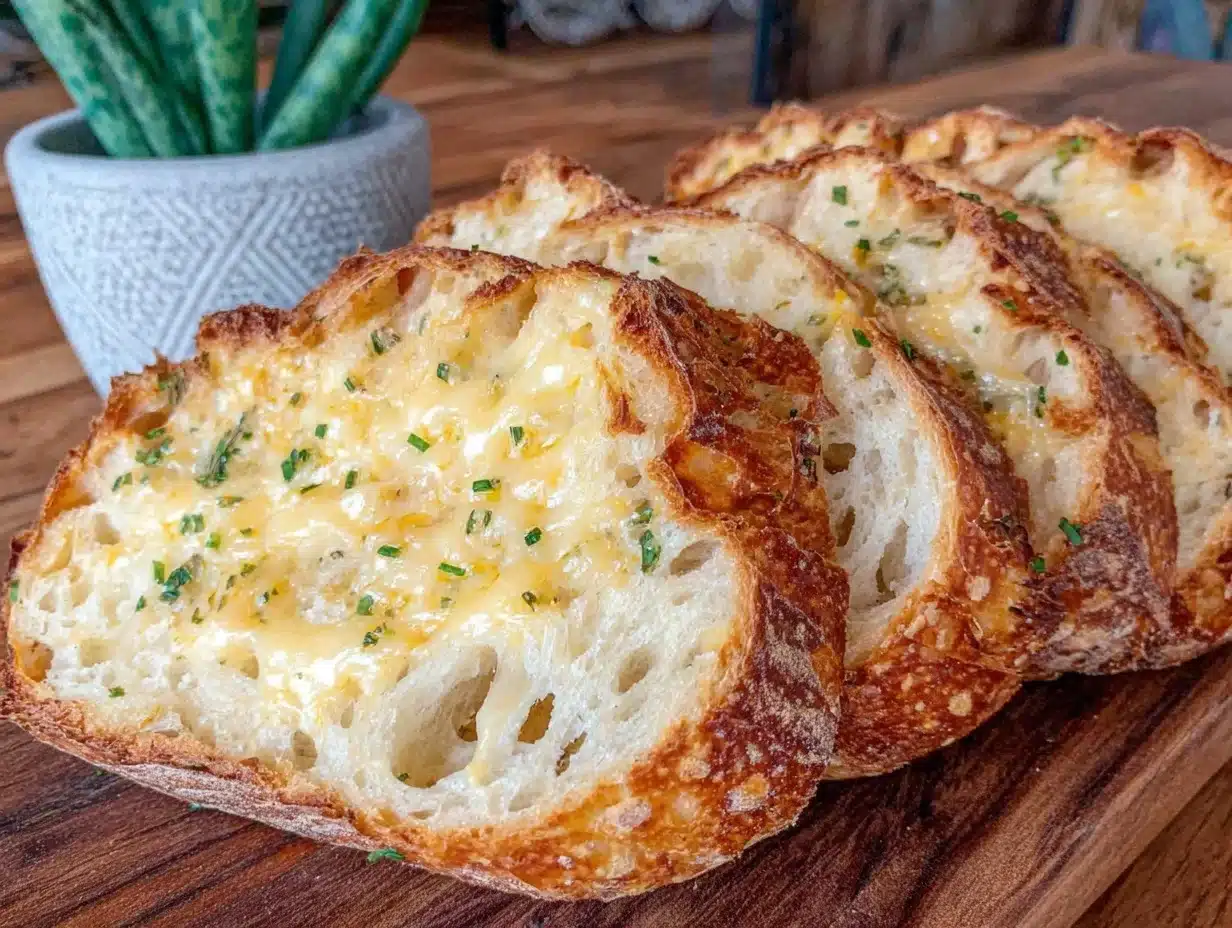
“Is that the sourdough you made? It smells insane!” my neighbor called out as I pulled the golden loaf from the oven on a quiet Saturday morning. Honestly, I hadn’t planned on baking bread that day — I was just fiddling with some leftover herbs in my fridge and a bit of cheese I needed to use up. What started as a casual experiment turned into a full-on obsession; I ended up baking this Crispy Italian Herbs and Cheese Artisan Sourdough Bread three times that week. The crust crackled with the kind of satisfying crunch that makes you pause mid-bite, and the herbs mingled perfectly with the nutty, melted cheese inside. It wasn’t just bread — it was a cozy, savory hug in loaf form.
That moment reminded me why I love sourdough so much: it’s rustic, forgiving, and full of personality. This particular recipe combines that traditional charm with Italian flair, giving you a loaf that’s crispy on the outside, tender and flavorful inside. I’ve tweaked this over time to balance the herbs just right — too much oregano or rosemary can overpower, but here, they sing alongside fresh garlic and Parmesan, creating something truly special. If you’ve ever been hesitant about baking artisan bread at home, this recipe might just change your mind. There’s something grounding about kneading the dough with your hands and waiting for the magic to happen while your kitchen fills with the aroma of toasted herbs and melting cheese.
In fact, the first time I shared this bread at a casual brunch, it sparked a conversation about all things homemade — from my creamy custard toast to the way good bread can turn simple meals into memorable ones. It stuck with me because this isn’t just a recipe; it’s a little moment of joy, perfect for slow mornings and friendly gatherings. I think you’ll find that same quiet satisfaction in every bite.
Why You’ll Love This Recipe
After countless batches and happy taste testers, I can confidently say this Crispy Italian Herbs and Cheese Artisan Sourdough Bread is a keeper. Here’s why it’s become a favorite in my kitchen:
- Quick & Easy: While sourdough requires some patience, the active hands-on time is minimal. The dough comes together in under 20 minutes, making it manageable even on busy days.
- Simple Ingredients: No fancy or hard-to-find items here — just staple pantry ingredients with fresh herbs and cheese that you probably have on hand.
- Perfect for Entertaining: Its impressive crust and rich, savory flavor make it a star at brunches, dinner parties, or casual weekend meals.
- Crowd-Pleaser: Kids and adults alike love the crispy crust and cheesy, herb-studded interior. It’s a great way to introduce sourdough to picky eaters.
- Unbelievably Delicious: The combination of Parmesan and fresh herbs baked into the crust creates a flavor depth that’s both comforting and sophisticated.
This recipe stands out because of the way the herbs and cheese are folded into the dough, creating pockets of flavor without compromising the sourdough’s airy crumb. The crust achieves that artisan crackle thanks to a high-heat bake and a splash of steam at the start, which I’ll explain in detail. Unlike other sourdough recipes that can feel intimidating, this one trusts the natural process and lets the ingredients shine through.
For me, this bread isn’t just about taste — it’s about the ritual of baking, the anticipation, and the joy of sharing something handmade. Once you try it, you’ll understand why it’s become a quiet favorite in my rotation.
What Ingredients You Will Need
This recipe uses simple, wholesome ingredients to deliver bold flavor and satisfying texture without the fuss. Here’s what you’ll gather before you start:
- Active Sourdough Starter (150g / 5.3 oz): This is the heart of your bread. I recommend a bubbly, mature starter for the best rise.
- All-Purpose Flour (400g / 14 oz): Provides structure. You can swap half for bread flour for extra chewiness.
- Water (300ml / 10 fl oz), lukewarm: Hydrates the dough. Using filtered water helps avoid off-flavors.
- Salt (8g / 1.5 tsp): Enhances flavor and strengthens gluten.
- Olive Oil (2 tbsp): Adds richness and helps crust crisp up beautifully.
- Italian Herb Mix (2 tbsp): A blend of dried oregano, rosemary, thyme, and basil. Fresh herbs can be used but adjust quantity (around 3 tbsp fresh).
- Garlic (2 cloves, minced): For that savory punch.
- Parmesan Cheese (100g / 3.5 oz), finely grated: Use a good quality aged Parmesan for deep flavor and a crispy topping.
Optional additions if you want to experiment:
- Sun-dried tomatoes or olives: Chop finely and fold in for bursts of umami.
- Chili flakes: For a subtle heat kick.
Choosing the right Parmesan really makes a difference here — I usually go with Parmigiano-Reggiano from a trusted deli. Also, if you’re looking for a gluten-free version, swapping the flour for almond or oat flour won’t give the same rise but can be tasty in a flatbread style.
Equipment Needed
- Mixing Bowl: A large, sturdy bowl for combining ingredients. Glass or stainless steel works best.
- Dutch Oven or Cast Iron Pot with Lid: Essential for creating steam and that crispy crust. If you don’t have one, a heavy baking sheet with a metal bowl flipped over works as a makeshift steam chamber.
- Dough Scraper: Handy for folding and handling sticky dough without frustration. If you don’t have one, a sturdy spatula or clean hands will do.
- Kitchen Scale: Precision matters in bread baking. I’ve tried measuring cups, but scales give consistent results every time.
- Proofing Basket or Bowl with Towel: Helps the dough keep its shape during the final rise. A bowl lined with a clean, flour-dusted tea towel works perfectly.
- Bread Lame or Sharp Knife: For scoring the dough before baking. A razor blade or a very sharp paring knife can substitute.
Personally, investing in a Dutch oven transformed my sourdough baking — the crust turned out restaurant-quality crisp. Cleaning cast iron can be a chore, but wiping it down and heating it dry before storage keeps it happy for years. For budget-conscious bakers, using a heavy roasting pan with an upside-down tray as a lid also works.
Preparation Method
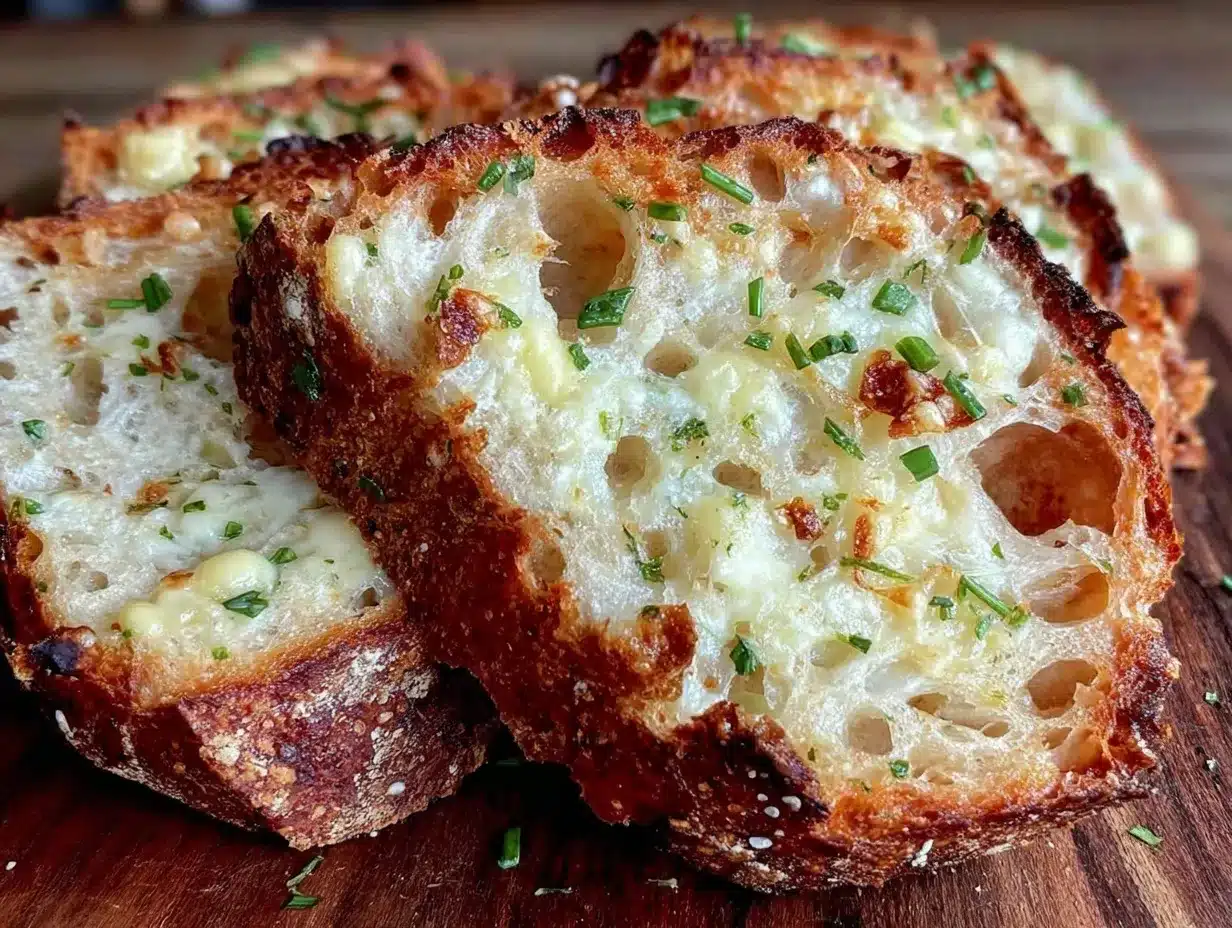
- Mix Starter and Water (5 minutes): In your large mixing bowl, combine 150g active sourdough starter with 300ml lukewarm water. Stir gently until the starter dissolves. You want the water about 75°F (24°C), not too hot to kill the yeast.
- Add Flour and Salt (3 minutes): Add 400g all-purpose flour and 8g salt to the bowl. Mix with a wooden spoon or your hand until no dry flour remains. The dough will be shaggy and sticky — that’s good.
- Autolyse (30 minutes): Cover the bowl with a damp towel and let it rest. This step hydrates the flour and makes kneading easier.
- Add Herbs, Garlic, Cheese, and Olive Oil (5 minutes): Sprinkle in 2 tbsp Italian herb mix, minced garlic, 100g grated Parmesan, and 2 tbsp olive oil. Fold the dough gently but thoroughly to distribute evenly. Expect some resistance; the dough should start feeling elastic.
- Bulk Fermentation and Stretch & Fold (4 hours): Cover the dough and let it rise at room temperature. Every 30 minutes for the first 2 hours, perform a stretch and fold: pull a portion of dough up and fold it over to strengthen gluten. After 4 hours, the dough should be airy and roughly doubled.
- Shape the Dough (10 minutes): Turn dough onto a floured surface. Shape into a tight round loaf by folding edges into the center, then tucking underneath to create surface tension. Place seam-side up in a floured proofing basket or bowl.
- Final Proof (2 hours): Cover the dough and let it rise until puffy but not doubled. Alternatively, refrigerate overnight for better flavor development.
- Preheat Oven and Dutch Oven (45 minutes): Place your Dutch oven with lid inside the oven and preheat to 475°F (245°C). This ensures the pot is super hot for baking.
- Score and Bake (40-45 minutes): Carefully remove the hot Dutch oven. Turn your dough out seam-side down onto parchment paper. Using a bread lame or sharp knife, score a few slashes on top. Transfer the dough with parchment into the pot. Cover and bake for 20 minutes. Remove lid and bake another 20-25 minutes until deep golden and crusty.
- Cool Completely (2 hours): Let the bread cool on a wire rack before slicing. This sets the crumb and avoids gummy texture.
Watch the dough during bulk fermentation — if it isn’t rising much, your starter might need feeding. If the dough feels too sticky to handle, lightly dust your hands or work surface with flour, but don’t overdo it or the crumb will stiffen.
Cooking Tips & Techniques
One of the trickiest parts of artisan sourdough is getting that perfect crust. Here are some tips I’ve picked up through trial (and error):
- Don’t skip the steam: Baking in a covered Dutch oven traps moisture, which helps the crust develop that shiny, crackly texture. If you don’t have a Dutch oven, spritzing water into the oven or placing a pan of hot water below helps.
- Perfect scoring: Scoring allows the bread to expand without bursting unpredictably. Use quick, confident slashes at a 45-degree angle.
- Temperature control matters: Lukewarm water activates your starter well; too hot kills it. Also, keep your kitchen around 70°F (21°C) for best fermentation.
- Patience pays off: I know it’s tempting, but don’t rush the final proof. Under-proofed dough will snap back when scored, while over-proofed dough can collapse.
- Use a kitchen scale: Baking is science — weighing ingredients makes a huge difference in consistency.
Once, I forgot to preheat my Dutch oven and ended up with a pale crust and dense crumb — lesson learned! Also, folding in the herbs and cheese gently prevents them from sinking to the bottom, keeping flavor evenly distributed. If you want extra cheesy pockets, sprinkle a little more Parmesan on top before baking.
Variations & Adaptations
This recipe is pretty flexible, so you can customize it to your taste or dietary needs:
- Gluten-Free Version: Use a gluten-free flour blend with xanthan gum, but expect a denser texture. Adding psyllium husk powder helps with structure.
- Seasonal Herb Swap: In spring, try fresh dill and chives instead of Italian herbs. Summer calls for fresh basil and sun-dried tomatoes for a Mediterranean twist.
- Cheese Variety: Swap Parmesan for sharp Asiago or Pecorino Romano for a different flavor profile. For a smoky twist, add smoked mozzarella.
- Garlic-Free: If you’re avoiding garlic, replace it with a teaspoon of garlic-infused olive oil to keep some aroma without the bite.
- Spicy Kick: Add a teaspoon of chili flakes or finely chopped jalapeños to the dough for warmth.
Once, I stirred in chopped kalamata olives and sun-dried tomatoes — the result was a tangy, savory loaf perfect alongside a fresh salad like the green goddess salad I love. Feel free to experiment — artisan bread is all about making it your own.
Serving & Storage Suggestions
This bread is best served warm or at room temperature. The crust stays crisp if you slice it fresh, but if it softens, a quick toast brings back that satisfying crunch. For serving ideas:
- Pair with olive oil and balsamic vinegar for dipping.
- Make a sandwich with fresh mozzarella and heirloom tomatoes.
- Serve alongside hearty soups or stews for soaking up broth.
Store your bread wrapped loosely in a cloth bag or paper to keep the crust crisp for up to two days. For longer storage, slice and freeze in airtight bags; toast slices straight from the freezer — no thawing needed.
Flavors deepen if you let the loaf rest a day before eating, but trust me, it’s hard to resist fresh from the oven. Reheat in a 350°F (175°C) oven for 5-7 minutes to refresh crustiness if needed.
Nutritional Information & Benefits
A typical serving (one slice, about 80g) of this artisan sourdough bread provides approximately:
| Calories | 190 kcal |
|---|---|
| Carbohydrates | 30g |
| Protein | 7g |
| Fat | 5g |
| Fiber | 2g |
The sourdough fermentation process helps break down gluten and makes minerals more bioavailable, which can aid digestion compared to regular bread. The herbs add antioxidants, and Parmesan contributes calcium and protein. While it’s not low-carb, this bread fits well into a balanced diet, especially when paired with veggies or lean proteins.
Be mindful that Parmesan and wheat contain common allergens, so adjust accordingly for dietary restrictions. For a dairy-free version, try vegan cheese or omit cheese altogether and boost herbs.
Conclusion
This Crispy Italian Herbs and Cheese Artisan Sourdough Bread is a simple pleasure I keep coming back to — it’s a recipe that’s approachable yet impressive. Whether you’re a seasoned baker or trying sourdough for the first time, the crispy crust and fragrant, cheesy crumb invite you to slow down and savor the moment. I love how it brings a bit of rustic Italian charm to my kitchen, reminding me that sometimes the best recipes come from happy accidents or small experiments.
Feel free to tweak the herbs, cheese, or add-ins to match your mood or pantry. And if you happen to try it, I’d love to hear how it turned out — every kitchen has its own spin on this classic. It’s the kind of bread that turns a simple meal into something special, and honestly, that’s why it’s stuck around in my baking rotation.
FAQs About Crispy Italian Herbs and Cheese Artisan Sourdough Bread
How long does it take to make this sourdough bread from start to finish?
Including fermentation and proofing, plan for about 8-10 hours total. Most of that is hands-off rising time, so active prep is around 30-40 minutes.
Can I use store-bought yeast instead of sourdough starter?
You can, but it won’t have the same flavor complexity. If you do, reduce the rising times and skip the starter, using about 1 tsp active dry yeast instead.
What if my dough is too sticky to handle?
Lightly flour your hands and work surface, but avoid adding too much extra flour or the bread may become dense. Using a dough scraper helps manage stickiness.
How do I know when the bread is fully baked?
Look for a deep golden-brown crust and a hollow sound when you tap the bottom. Internal temperature should be around 205°F (96°C).
Can I add other cheeses besides Parmesan?
Definitely! Sharp Asiago, Pecorino Romano, or smoked mozzarella work well. Just adjust quantity to taste and consider melting properties.
Pin This Recipe!
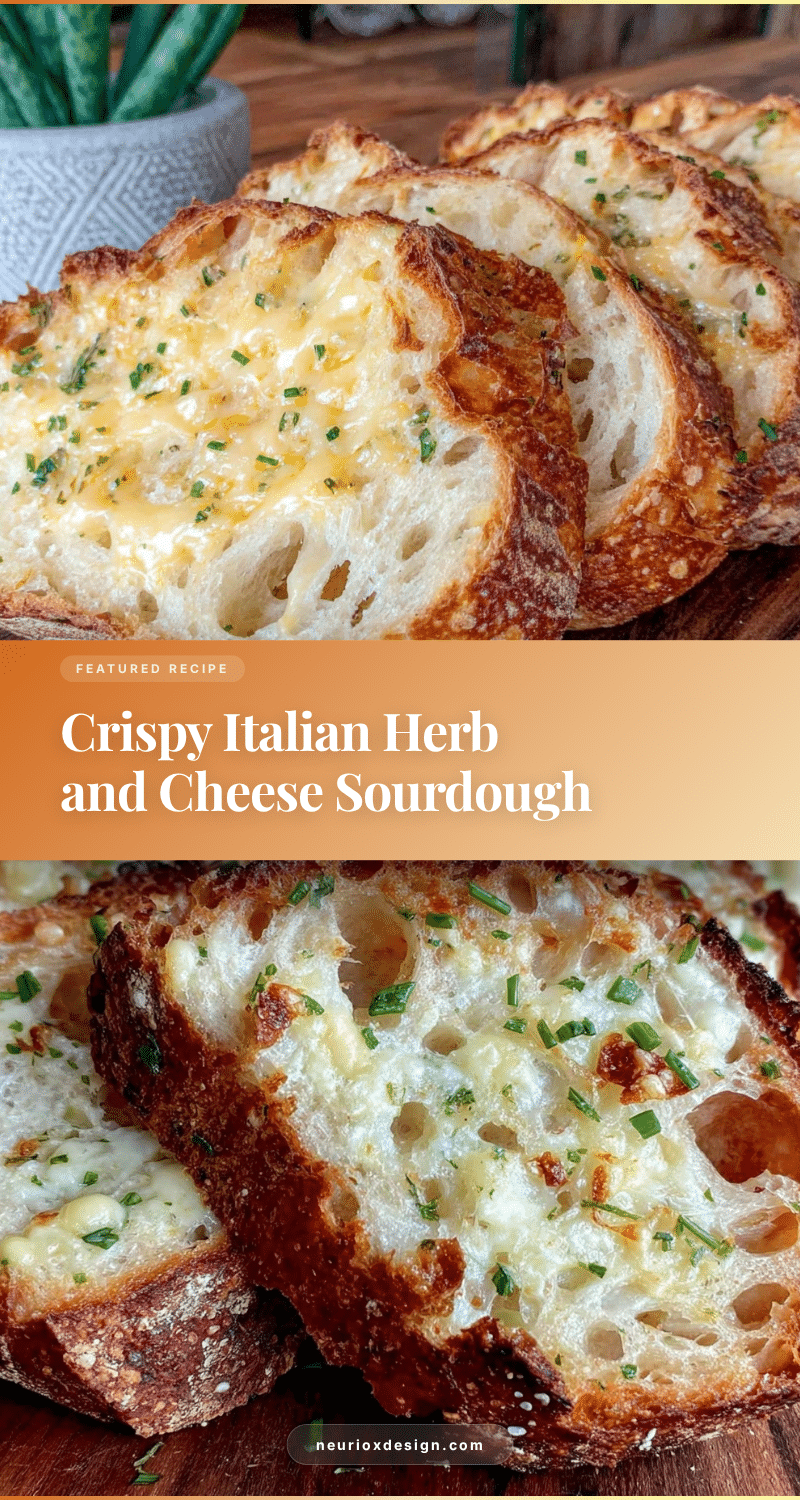
Crispy Italian Herbs and Cheese Artisan Sourdough Bread
- Total Time: 8 to 10 hours (including fermentation and proofing)
- Yield: 1 loaf (about 10-12 servings) 1x
Description
A rustic artisan sourdough bread infused with Italian herbs and Parmesan cheese, featuring a crispy crust and flavorful, cheesy interior. Perfect for slow mornings, brunches, or casual gatherings.
Ingredients
- 150g (5.3 oz) active sourdough starter
- 400g (14 oz) all-purpose flour (can substitute half with bread flour)
- 300ml (10 fl oz) lukewarm water (about 75°F / 24°C)
- 8g (1.5 tsp) salt
- 2 tbsp olive oil
- 2 tbsp Italian herb mix (dried oregano, rosemary, thyme, basil) or 3 tbsp fresh herbs
- 2 cloves garlic, minced
- 100g (3.5 oz) finely grated Parmesan cheese
- Optional: sun-dried tomatoes or olives, chopped finely
- Optional: chili flakes or finely chopped jalapeños
Instructions
- Mix 150g active sourdough starter with 300ml lukewarm water in a large mixing bowl until dissolved.
- Add 400g all-purpose flour and 8g salt; mix until no dry flour remains and dough is shaggy and sticky.
- Cover bowl with damp towel and autolyse for 30 minutes.
- Add 2 tbsp Italian herb mix, minced garlic, 100g grated Parmesan, and 2 tbsp olive oil; fold dough gently but thoroughly.
- Cover dough and bulk ferment at room temperature for 4 hours, performing stretch and folds every 30 minutes for the first 2 hours.
- Turn dough onto floured surface and shape into a tight round loaf; place seam-side up in a floured proofing basket or bowl.
- Final proof for 2 hours at room temperature or refrigerate overnight for better flavor.
- Preheat oven and Dutch oven to 475°F (245°C) for 45 minutes.
- Carefully remove hot Dutch oven; turn dough seam-side down onto parchment paper and score top with a bread lame or sharp knife.
- Transfer dough with parchment into Dutch oven; cover and bake for 20 minutes.
- Remove lid and bake for an additional 20-25 minutes until deep golden and crusty.
- Cool bread completely on a wire rack for about 2 hours before slicing.
Notes
[‘Use a bubbly, mature sourdough starter for best rise.’, ‘Preheat Dutch oven thoroughly to achieve a crispy crust.’, ‘Perform stretch and folds during bulk fermentation to strengthen gluten.’, ‘Score dough with quick, confident slashes at a 45-degree angle.’, ‘If dough is too sticky, lightly dust hands and surface with flour but avoid over-flouring.’, ‘For gluten-free version, use gluten-free flour blend with xanthan gum and psyllium husk powder; expect denser texture.’, ‘Optional add-ins include sun-dried tomatoes, olives, chili flakes, or different cheeses like Asiago or Pecorino Romano.’, ‘Store bread wrapped loosely in cloth or paper for up to 2 days; freeze sliced bread for longer storage.’, ‘Reheat bread at 350°F (175°C) for 5-7 minutes to refresh crustiness.’]
- Prep Time: 40 minutes
- Cook Time: 45 minutes
- Category: Bread, Artisan Bread
- Cuisine: Italian-inspired
Nutrition
- Serving Size: 1 slice (about 80g)
- Calories: 190
- Fat: 5
- Carbohydrates: 30
- Fiber: 2
- Protein: 7
Keywords: sourdough bread, artisan bread, Italian herbs, Parmesan cheese, crispy crust, homemade bread, easy sourdough