
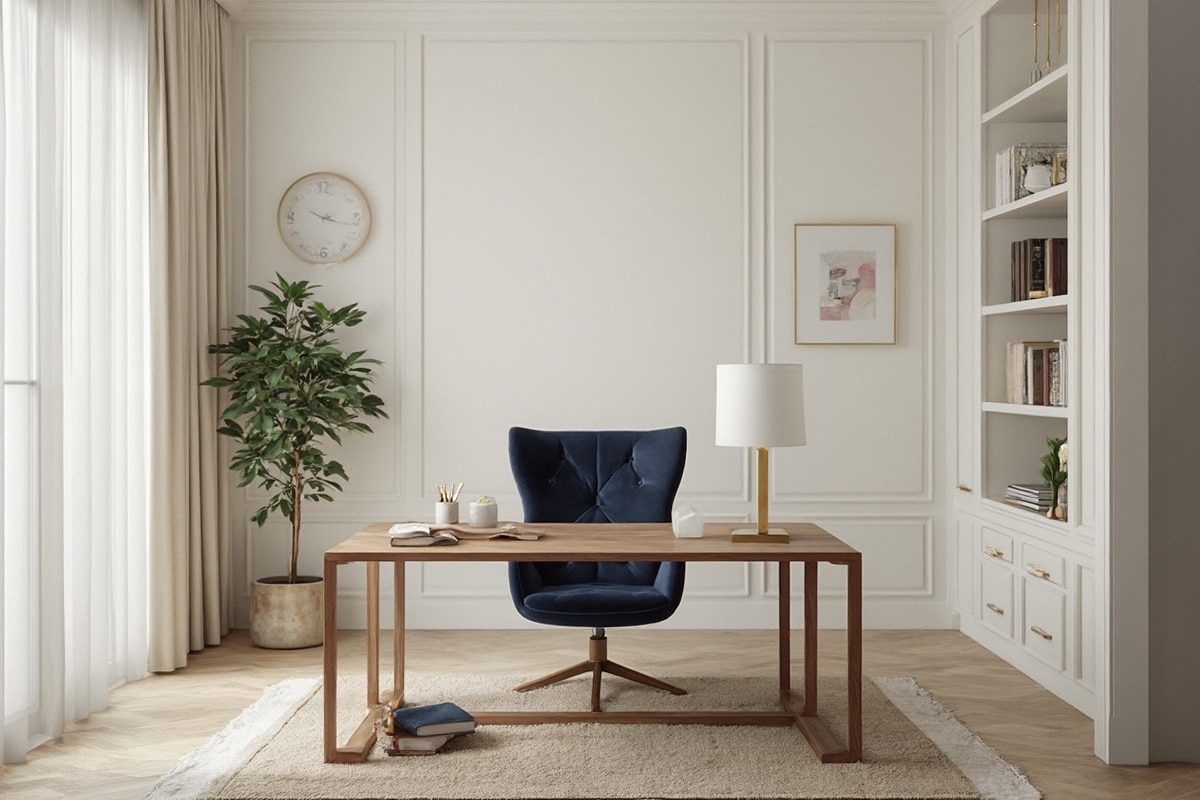
Home office decor has never been more important—or more inspiring. Just a few years ago, my workspace was little more than a cluttered corner in my living room, filled with mismatched furniture and piles of paperwork. I didn’t realize then how much a thoughtfully designed home office could change my productivity and well-being. After discovering the contemporary classic style, everything shifted. Suddenly, I was motivated to transform my workspace into a sanctuary—a place that combined crisp functionality with timeless elegance.
Did you know that according to a recent Houzz survey, 73% of people who revamped their home offices reported higher motivation and less stress at work? I’m not surprised. My own experience proved how much the right decor could boost focus and creativity. With just a few intentional updates—think soft white walls (Benjamin Moore’s Simply White, OC-117), a streamlined walnut desk, and tailored brass accents—my once-drab office felt like a magazine spread. The best part? The transformation didn’t require a huge budget or a professional designer.
If you’re dreaming of a workspace that’s as functional as it is beautiful, you’re in the right place. In this guide, I’ll share my favorite contemporary classic home office layouts, smart organization ideas, and practical decorating tips. Whether your space is a spare room or a small nook, you can create an effortlessly elegant home office that inspires every day.
What Defines Contemporary Classic Home Office Decor?
The contemporary classic home office style blends the best of today’s clean lines with the timeless appeal of traditional design. Imagine a space where a mid-century desk pairs perfectly with a tufted velvet chair, and streamlined shelving sits beneath vintage-inspired art. This style is all about balance—crisp, uncluttered surfaces with just enough warmth, texture, and personality to feel inviting.
The mood is calm and collected, never fussy or overwhelming. You’ll see neutral color palettes—soft greys, creamy whites, gentle taupes—layered with natural woods, polished metals, and plush textiles. The result is a space that feels both fresh and enduring. It’s a style that works beautifully in city apartments, suburban homes, or even compact studio setups.
Contemporary classic home office decor draws inspiration from iconic designers like Kelly Wearstler, whose offices blend tailored silhouettes with unexpected pops of color, and Nate Berkus, who’s famous for mixing vintage finds with modern pieces. You might also spot the look in celebrity homes—think of Reese Witherspoon’s bright, art-filled workspace or the subtle sophistication of Emma Watson’s London apartment office.
What makes this style so relevant now? As hybrid work becomes the norm, people crave spaces that are practical but also feel like a reflection of their taste. The contemporary classic approach nails that balance, offering organization and beauty in equal measure.
How Do I Plan My Perfect Contemporary Classic Workspace?
Every successful home office makeover begins with a plan. Start by assessing your space. Measure your room (length, width, ceiling height) and note natural light sources. For my own office, I taped out a 5’ x 7’ area on the floor to test layouts before moving anything heavy. Don’t forget to check for outlets, heating vents, and wi-fi strength in your chosen spot.
Next, think about your daily needs. Do you need room for dual monitors? Space for sketching or crafting? Consider what tasks take up most of your time. Jot down a wish list: ergonomic chair, adjustable-height desk, closed storage for paperwork, open shelves for display. Use inspiration boards—Pinterest is your friend here—to gather images that capture your dream office. Include color swatches, furniture styles, and decor details.
I always recommend creating a vision board, even if it’s on your phone. Mix magazine tear-outs, paint chips, and snapshots of favorite rooms. This process helps clarify your taste and spot patterns—maybe you love brass hardware, or always pick muted blues. My own vision board for my office revealed a love of classic symmetry (matching lamps, paired bookends) and natural materials (walnut, linen, rattan).
When narrowing down your design choices, ask yourself a few key questions: How much storage do I realistically need? Can I fit a reading nook or just a single chair? What items do I want on display, and what should stay hidden? Write your answers down—they’ll guide every shopping and styling decision.
Finally, sketch a simple floor plan, even if it’s just boxes on graph paper. Map out where your desk, chair, storage, and lighting will go. Remember to leave at least 30” clearance behind your desk for your chair, and keep walkways clear. I learned the hard way that cramming too much into a small space leads to frustration and clutter, so always prioritize function over filling every inch.
What Materials and Decor Items Do I Need?

To create a contemporary classic home office, you’ll need a blend of functional workspace basics and stylish decor pieces. Here’s a shopping list to get you started:
- Desk (60”x30” works well for most; look for walnut, oak, or white lacquer finishes)
- Ergonomic chair (tufted velvet, linen, or leather for comfort and style)
- Bookshelves or wall-mounted shelving (brushed brass, matte black, or wood)
- Closed storage (file cabinets or baskets to hide clutter)
- Table lamp or adjustable arm lamp (brass, black, or glass base)
- Area rug (5’x8’ in neutral wool or subtle pattern)
- Art prints or framed photographs (black, gold, or wood frames)
- Decorative accessories (ceramic vases, trays, candle holders)
- Desk organizer trays and pen holders (acrylic, wood, or metal)
- Plants (real or faux for greenery and freshness)
On a budget? Try IKEA for affordable desks and shelving, Target for stylish storage baskets, and local thrift stores for unique accessories. Watch for end-of-season sales at West Elm and Pottery Barn, or check Facebook Marketplace for high-quality secondhand pieces. Don’t be afraid to DIY—painting a thrifted desk or reupholstering a chair can save hundreds.
What Are the Step-by-Step Stages for Decorating a Contemporary Classic Home Office?

- Clear and Prep the Space (1 day):
Remove all items from your future office. Patch holes in the walls and clean floors. If you’re painting, now’s the time—soft white (BM OC-117), pale greige (SW Agreeable Gray 7029), or dusty blue (Farrow & Ball’s Oval Room Blue) set a timeless tone.
- Plan the Layout (1-2 hours):
Use painter’s tape to outline your desk and chair placement. Make sure you have at least 30” behind the desk and easy access to outlets. Place your desk near a window if possible for natural light.
- Assemble Key Furniture (Half day):
Build or move in your main desk and ergonomic chair. Test different desk angles—facing the window can boost mood, while facing the room may help with focus. Add bookshelves or floating shelves next.
- Install Storage and Organization (2-3 hours):
Place file cabinets, rolling carts, or storage baskets under or beside your desk. Label bins and files for easy access. I use a simple color-coded system (blue for bills, green for creative projects) to avoid confusion.
- Lay Down the Rug and Add Lighting (1 hour):
Position a 5’x8’ rug under the desk area for warmth and sound dampening. Add a table lamp or wall sconce at desk level. If possible, install a dimmer switch for overhead lighting to set the mood.
- Style with Decor and Art (1-2 hours):
Hang framed art or a gallery wall above your desk. Add a few decorative vases, trays, or pretty storage boxes. Keep surfaces 2/3 clear for a calm look—less is more.
- Bring in Greenery (30 minutes):
Place a medium plant (snake plant or fiddle leaf fig) in a ceramic pot nearby. Add a small potted plant to your desktop for freshness.
- Final Touches and Adjustments (1 hour):
Sit in your chair and look around. Adjust lighting or move accessories as needed. Take a photo—sometimes, seeing your space on camera helps spot clutter or awkward spots.
Troubleshooting tip: If your space feels cramped, remove nonessential furniture or go vertical with shelving. If it feels flat, layer in more textures—try a chunky knit throw or velvet pillow. My own office didn’t come together until I swapped a clunky file cabinet for a sleek rolling cart, instantly freeing up floor space.
What Are the Best Styling Tips and Design Techniques for a Magazine-Worthy Workspace?

Professional decorators know that the little details make all the difference. Start with balance—pair a large desk with a substantial chair, or a slim writing table with a lighter side chair. Remember symmetry: two lamps or a set of matching frames create visual calm.
Layering is key in contemporary classic home office decor. Stack a few coffee table books, top with a small sculpture, and add a candle for depth. Mix materials—combine wood, metal, and glass for interest. Use a variety of shapes, too—a round lamp next to a rectangular desk breaks up boxy lines.
I’ve made every styling mistake in the book, from overcrowding my shelves with too many trinkets to hanging art too high. The fix? Edit ruthlessly. Leave space between objects, and hang art so the center sits at eye level (about 57” from the floor).
Don’t forget proportion: small accessories get lost on a big desk, while oversized lamps can overwhelm a petite table. Step back and squint—if something jumps out or feels off-balance, move it or swap it out. For a lived-in look, add something personal: a favorite mug, a child’s drawing, or a vintage clock.
Finally, keep cords hidden with cable boxes or simple clips. Clean surfaces daily—a tidy workspace always photographs (and feels) better. Sometimes, I even swap art or throw pillows with the seasons for a quick refresh.
How Do I Choose the Perfect Colors and Textures?
The most inviting contemporary classic home offices start with a neutral palette. My go-to is a mix of warm whites (OC-117), greiges (SW 7029), and muted blues (F&B Oval Room Blue). These shades reflect light, making any space feel bigger and brighter.
Layer in textures for dimension—think a wool rug, velvet chair, and brass lamp. I like to add a chunky knit throw on my reading chair and linen curtains at the window. Mixing at least three textures keeps things interesting without feeling busy.
For accent colors, try a few small pops rather than a single bold wall. Navy blue trays, blush pink vases, or forest green plant pots work well. In spring and summer, I switch to lighter accents—sage green and pale coral. In fall, I bring in rust and gold.
A personal favorite combo: white walls, walnut desk, navy velvet chair, and a brass lamp. It’s classic, but never boring. Don’t be afraid to try unexpected pairings—a tan leather chair with a marble-topped desk looks sharp and modern.
What Common Design Mistakes Should I Avoid?
One of the biggest mistakes I see is choosing furniture that’s too large for the room. Measure before you buy, and leave at least 30” walkways. Avoid dark paint in small, windowless rooms—it can feel heavy and closed-in.
Lighting is another common pitfall. Relying on overhead lighting alone makes a workspace feel cold and flat. Layer in desk lamps and wall sconces for warmth. I once tried working in a room with only a harsh ceiling fixture and lasted about a week before adding a soft brass table lamp.
Overdecorating is tempting, but remember: less is more. Too many accessories create visual clutter and distract from what matters. Stick to your vision board and edit regularly. If you’re struggling with flow, try rearranging your layout until movement feels natural—sometimes just angling your desk or swapping the rug position makes a huge difference.
Finally, don’t ignore storage. Piles of paper and tangled cords undo even the prettiest decor. Invest in closed bins and cord organizers—I learned this the hard way after tripping over a power strip for the third time in one week!
What Are Some Budget-Friendly Alternatives for Contemporary Classic Decor?
You don’t need a designer budget to get the look. Try spray-painting thrifted lamps or drawer pulls with brushed brass paint for a luxe touch. IKEA’s Alex drawers are a classic favorite for affordable storage, and they blend seamlessly into most office setups.
Upcycle old frames with a coat of matte black or gold spray paint. For art, download printable prints from Etsy and use budget frames from Target. Hunt for solid wood desks at estate sales—you can often refinish them for less than $50.
I love mixing high and low: splurge on a comfortable chair, but save on accessories and storage. My own favorite find was a $60 vintage bookshelf that I sanded and painted myself—a little elbow grease, and it looks like it came from a high-end boutique.
Conclusion: Why Contemporary Classic Home Office Decor Works Wonders
Creating a beautiful, organized home office is more than just a trend—it’s an investment in your daily happiness and productivity. The contemporary classic style brings together timeless elegance and modern convenience, making even the simplest workspace feel special.
My advice? Start small. Paint a wall, swap in a new desk lamp, or add a single piece of inspiring art. Every little change adds up. I’ve seen firsthand how a well-designed office can transform not just your space, but your mood and mindset.
Ready to make your office the best room in the house? Grab your tape measure, gather some inspiration, and take the first step. Your dream workspace is closer than you think—let’s make it happen, one thoughtful detail at a time.
Frequently Asked Questions: Contemporary Classic Home Office Decor
- How can I make a small home office feel larger?
Use light wall colors, mirrors to reflect light, and floating shelves instead of bulky bookcases. Keep the furniture footprint minimal and clear surfaces regularly. - What’s the best way to organize cords and chargers in a stylish way?
Use cord management boxes, adhesive clips along the back of your desk, and choose woven or fabric-wrapped cords for a tidy look. Hide power strips behind storage bins if possible. - How do I blend personal items with a contemporary classic style?
Choose simple frames for family photos and display personal mementos sparingly. Mix them with classic accessories like vases or books for a balanced look. - Can I use color in a contemporary classic home office?
Absolutely! Stick to a mostly neutral base, then add color with accent pieces—think a navy chair, green lamp, or blush artwork. Switch accents seasonally for variety. - What are the must-have furniture pieces for this style?
A streamlined desk (wood or lacquer), an ergonomic chair with classic lines, open shelving or bookcases, and a statement lamp. Add a soft rug and at least one closed storage solution for paperwork.